Start a project
We'll respond as soon as possible with clear next steps — no obligations.
Case study · Beauty & wellness
Faircare is a massage studio for women in Berlin-Prenzlauer Berg, with massages, cosmetic treatments and gift vouchers. We are giving the existing site a large-scale update on the same platform: a new block library, one price source for German, English and Ukrainian, and a voucher shop set up in code.
The brief
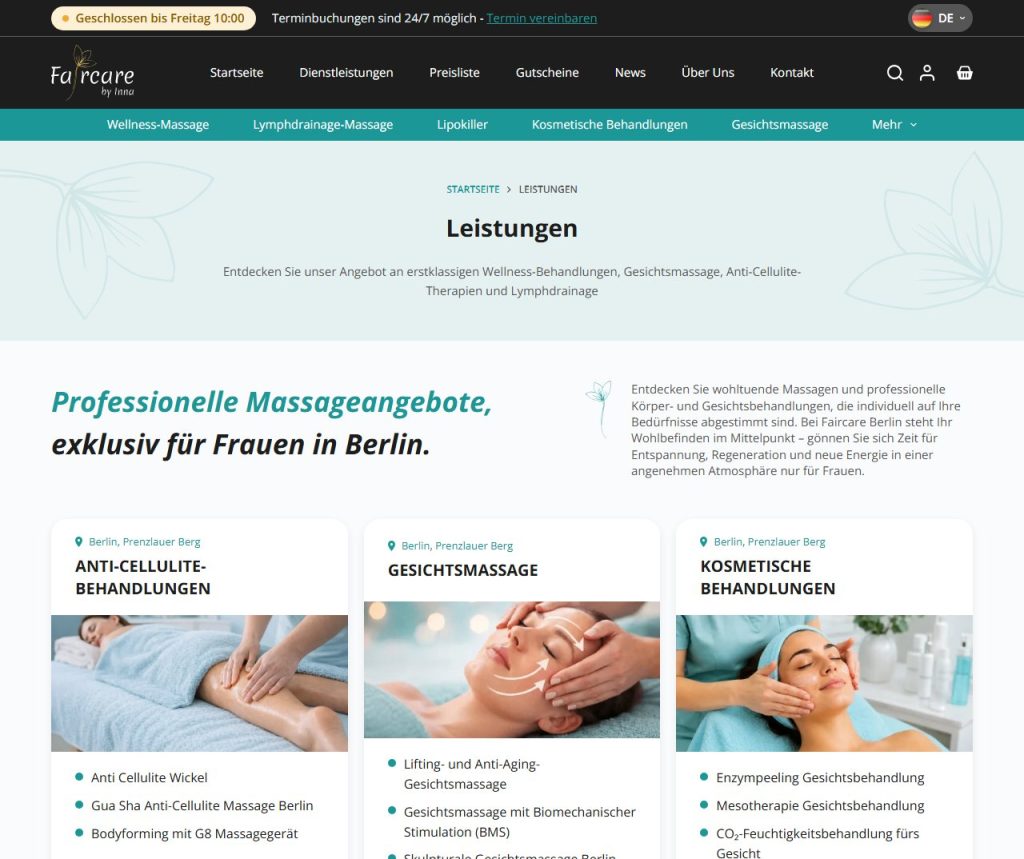
Faircare runs a massage studio exclusively for women in Berlin-Prenzlauer Berg. The website presents its massages and cosmetic treatments, sells gift vouchers as a digital code or a printed card, and sends visitors to the studio’s Treatwell page to book an appointment.
The update keeps the existing base — Blocksy, WooCommerce, YITH Gift Cards and Polylang — and renews what sits on top: a block library built from Figma, one price source for three languages, and shop settings kept in versioned code instead of hand-clicked screens.
The challenge
Faircare already sold gift vouchers online, and the update had to keep that working: voucher products, shop settings and invoice options had to reach the new build without being clicked together again by hand.
On top came three languages sharing one set of prices, and the rules a small German shop has to follow — from AI image labels to accessibility and the right of withdrawal.
Prices are stored once on the German treatment. English and Ukrainian pages show the same rows with their own texts, and expired discounts disappear on their own.
The WooCommerce importer cannot round-trip YITH gift-card products, so vouchers, shop settings and invoice options are provisioned from versioned code.
AI image labels, accessibility checks, German-only PDF invoices, a withdrawal link and a short checkout for digital vouchers — all part of the build.
Behind the build
The update was built in one dense sprint in August: Figma frames became markup and blocks, the theme and the shop set-up followed, and an accessibility pass closed the round. Content, legal pages, SEO and the go-live are the next steps.
What we built
Price card
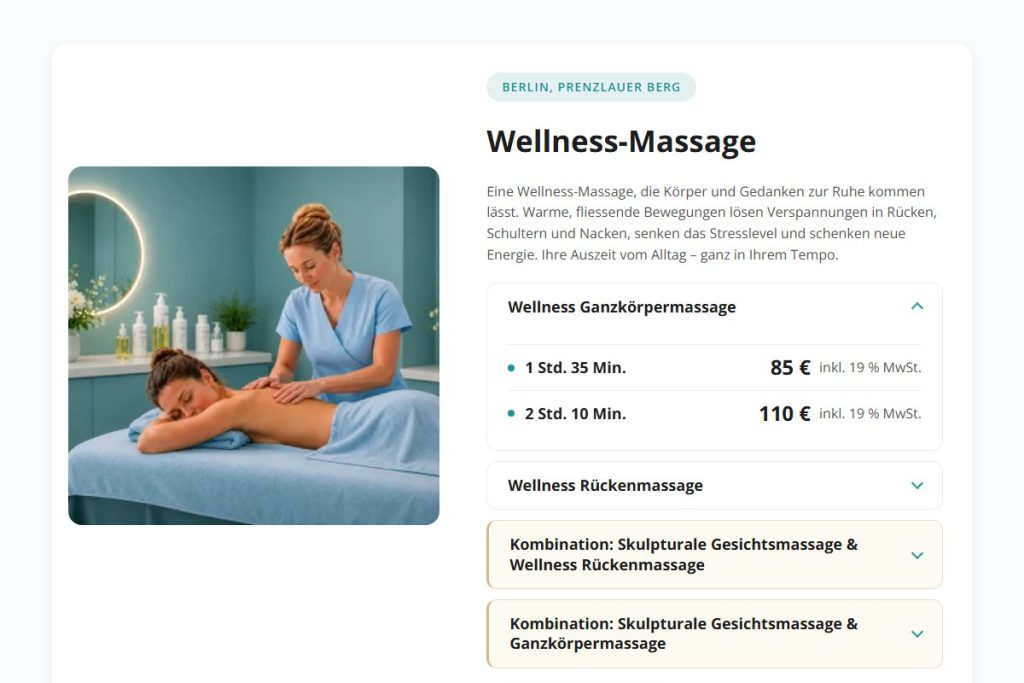
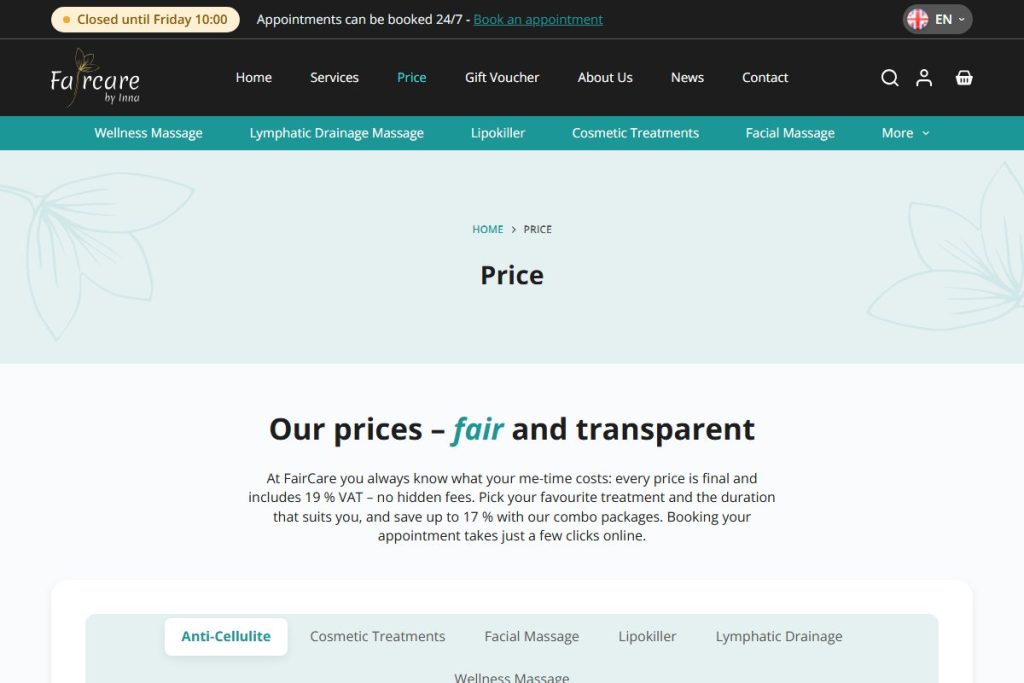
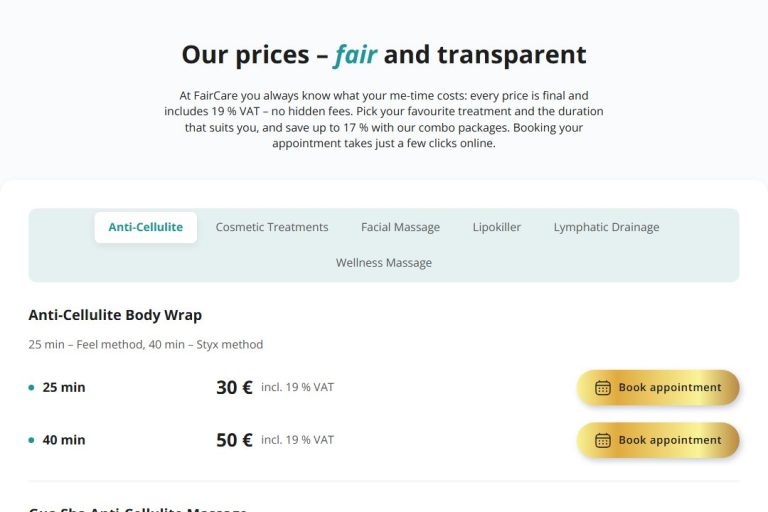
On every service page the price card comes first: duration and price for each option, a discount badge with a countdown of the days left, and a booking button that leads to the studio’s Treatwell page.
Price system
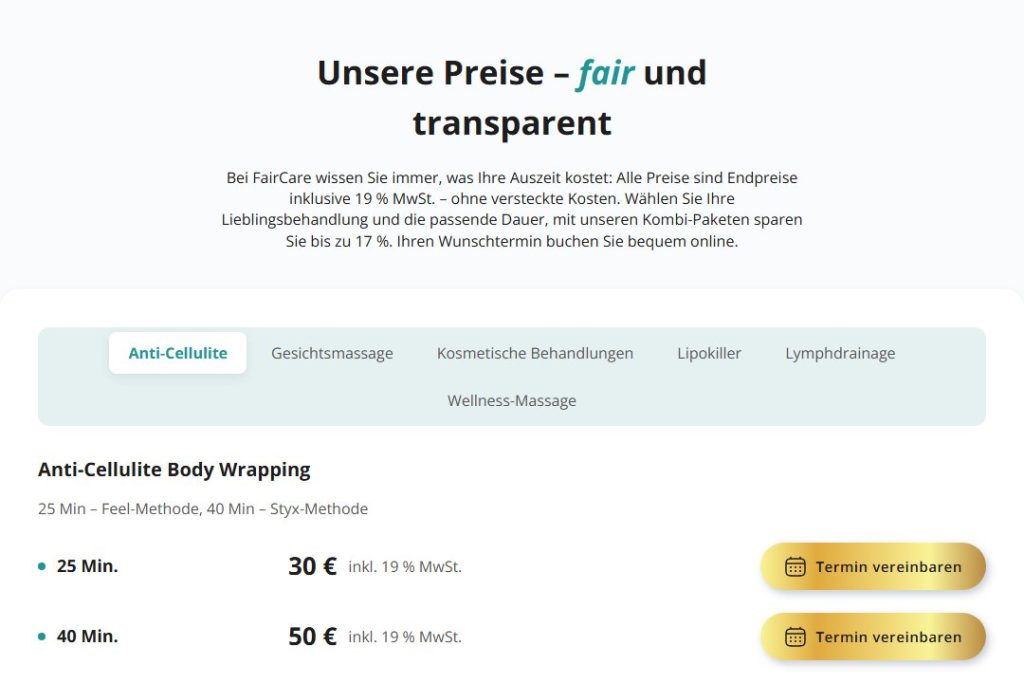
All prices are entered in one form under Services → Prices: duration, price, discount with end date and booking link per row. The numbers are stored once and feed the price list, the price cards and the service cards inside news posts.
Voucher shop
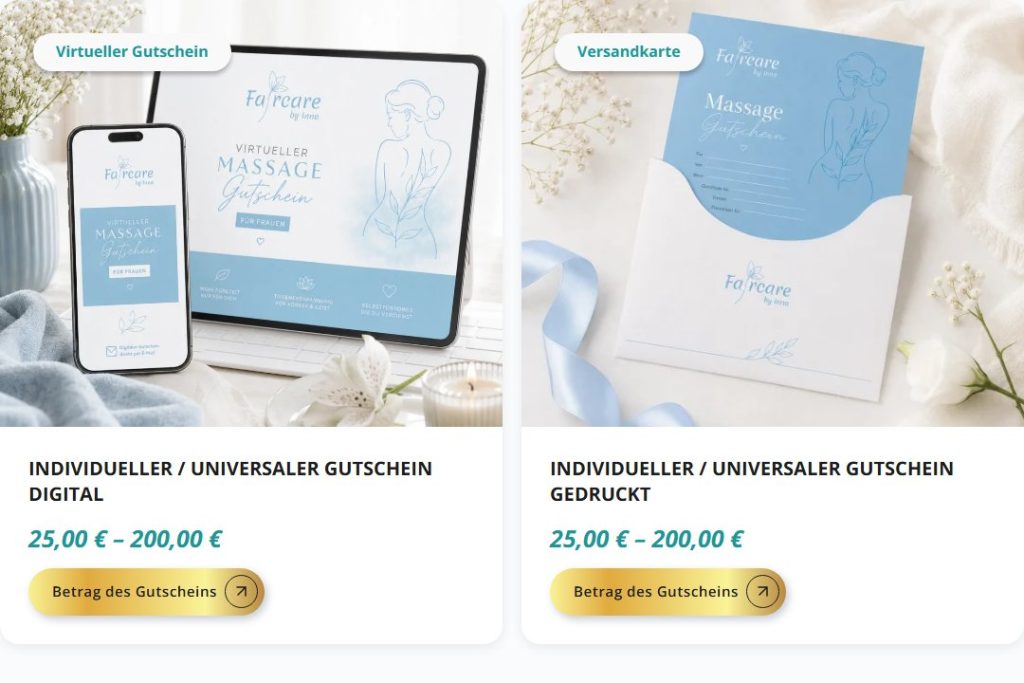
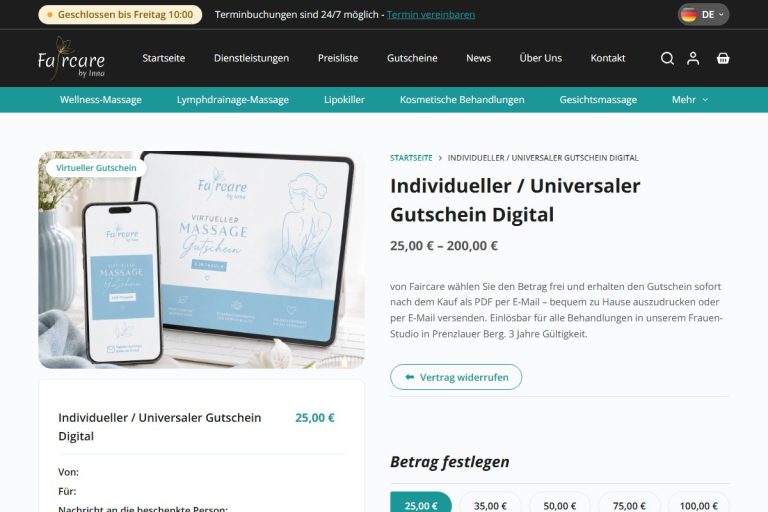
Vouchers come as a digital code or a printed card, with a free amount from 50 to 1000 euros. Carts with only digital vouchers skip the address fields, and the voucher code appears on the German PDF invoice.
Opening hours & languages
Two custom header elements: a status pill that reads the studio’s working hours and shows “Open until …” or “Closed until …”, and a flag language switcher for German, English and Ukrainian, with correctly declined weekday names in Ukrainian.
Contacts hub
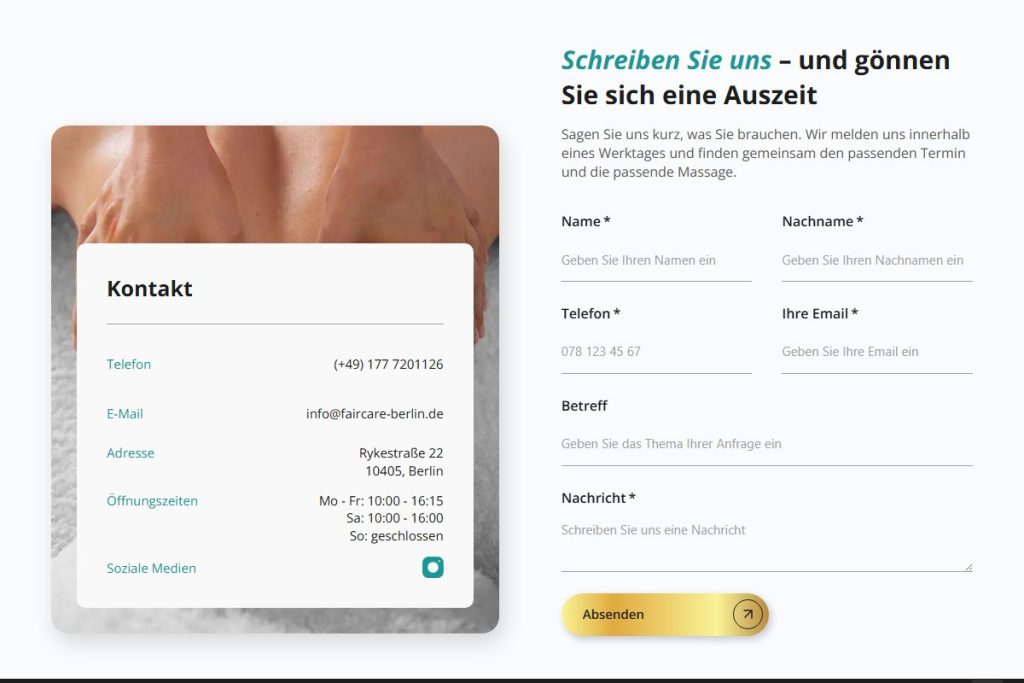
One admin menu with tabs for details, social links, working hours and the footer form. The same data feeds the contact section with form, contact card and photo that appears before the footer on every page.
Inside the project
Most agencies show you the finished site. We show you how it got there. Open any discipline to see what the team did and what it handed over.
01 / Project management
Two repositories, one routine: every change went through a dev or feature branch and a pull request — 29 merged so far. A CI build check guards the plugin’s dev branch, and a merge to main builds and deploys theme and blocks automatically.
29
merged pull requests
78
commits in two repositories
What we did
Handed over Approved scope and requirements → Design
02 / UI/UX design
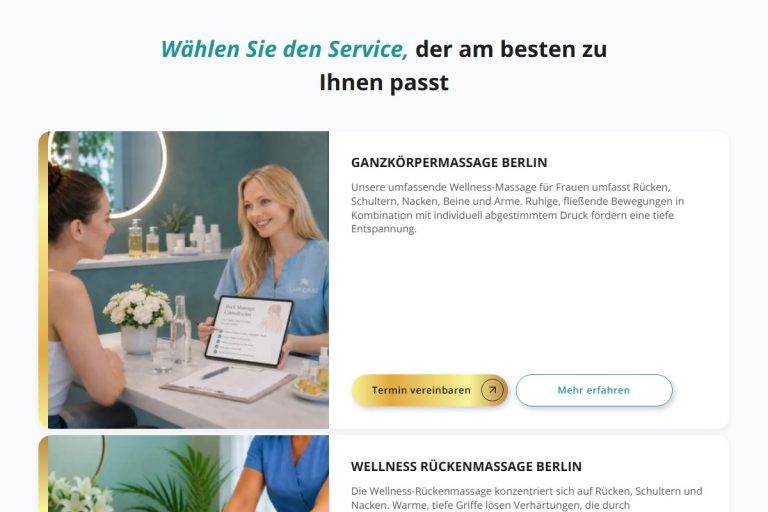
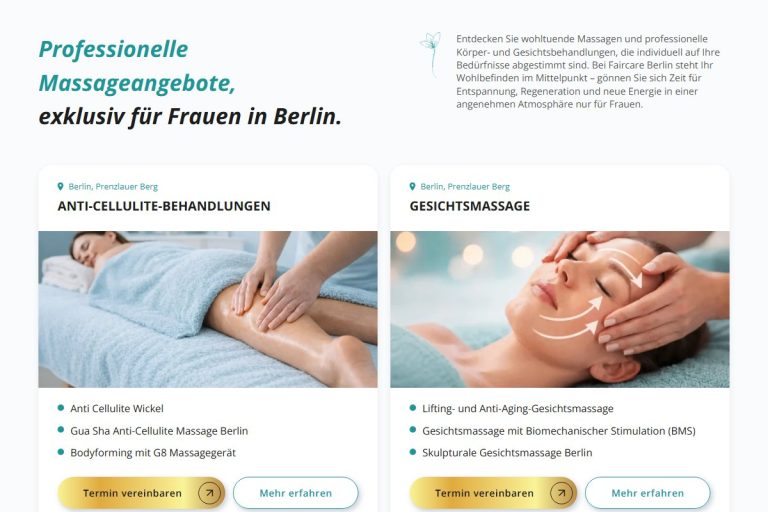
The blocks were built from Figma frames in two steps: first HTML and SCSS markup with a written report, then the Gutenberg block. Most reports document responsive checks at four screen widths, from desktop down to phone.
11
markup reports from Figma frames
10
palette colours for text and backgrounds
What we did
Artifacts
Handed over Figma designs and a block system → Development
03 / Development
A Blocksy child theme with a hierarchical services type, a central price screen and a contacts admin; a plugin with 18 server-rendered blocks; and two must-use plugins for PDF invoices. Shop, voucher, invoice and accessibility settings are applied from code.
18
custom Gutenberg blocks in five categories
8
data-driven blocks, from price tabs to gift cards
2
must-use plugins for PDF invoices
What we did
Artifacts
Handed over Tested build on staging → Content & SEO
04 / Content
The service catalogue stands in three languages: six service groups and 15 treatments each, with 20 price options that all languages share. Interface texts run through our own extract and compile tools, and client-entered values are registered for translation.
63
published service pages, 21 per language
20
price options on 15 treatments
752
translatable interface strings
What we did
Artifacts
Handed over Structured content in the CMS → SEO & GEO
The project in numbers
Every figure is counted from the new local version — its code, its database and its translation files.
3
languages: German, English, Ukrainian
18
custom Gutenberg blocks
8
blocks with an AI-disclosure badge
63
published service pages in three languages
20
price options, stored once for all languages
6
gift-card products, digital and printed
752
translatable interface strings
29
merged pull requests
Below the surface
Visitors will see prices, vouchers and opening hours. Underneath sit the settings, safety nets and rules that keep them right in three languages.
WooCommerce, YITH, PDF invoices and Accessibility Checker are configured from versioned arrays and re-applied with every version bump.
Codes are generated before the order e-mail, and postdated cards with an unreadable date are sent right away instead of getting stuck.
Invoices are rendered in German even when the order was placed in English or Ukrainian.
752 interface strings, our own extract and compile tools, and weekday names correctly declined for Ukrainian.
Seven filters keep page-specific blocks on their pages, and service templates place prices and treatments in fixed slots.
Accessibility Checker covers services and products, focus styles are visible, and statement drafts exist in three languages. A visitor toolbar plugin was tested and dropped.
Eight blocks can show an EU AI Act disclosure badge, and every image in the media library has its own AI-generated flag.
Both repositories build and deploy through GitHub Actions on main, the plugin adds a CI build check on dev, and 29 pull requests are merged.
What you can expect
We build for the things that last — a platform that is clearer to navigate, more credible to every visitor and genuinely easier for your team to run and grow.
Clear categories, filters and prices let visitors find the right offer themselves instead of writing to ask where to begin.
A site that looks and reads like the quality behind it — for first-time visitors and long-standing customers alike.
Your team updates products, content and news itself — no developer ticket, no waiting in a queue.
New products, categories and languages slot in as the business expands — without a rebuild.
We agree the goals that matter up front and build toward them together — then stay on as a partner after launch to keep the platform sharp as the business grows.
In their words
An update proves itself in daily use — this is how the studio sees it so far.
Our prices now live in one place and show up the same way in German, English and Ukrainian. Vouchers and invoices run from settings we no longer have to click together.
Working with
Start a project
We will respond as soon as possible with clear next steps — no obligations.